

The information here may change before this webpage can be updated. Please consult your parish priest or other trusted resources to ensure the information is current.
Advent
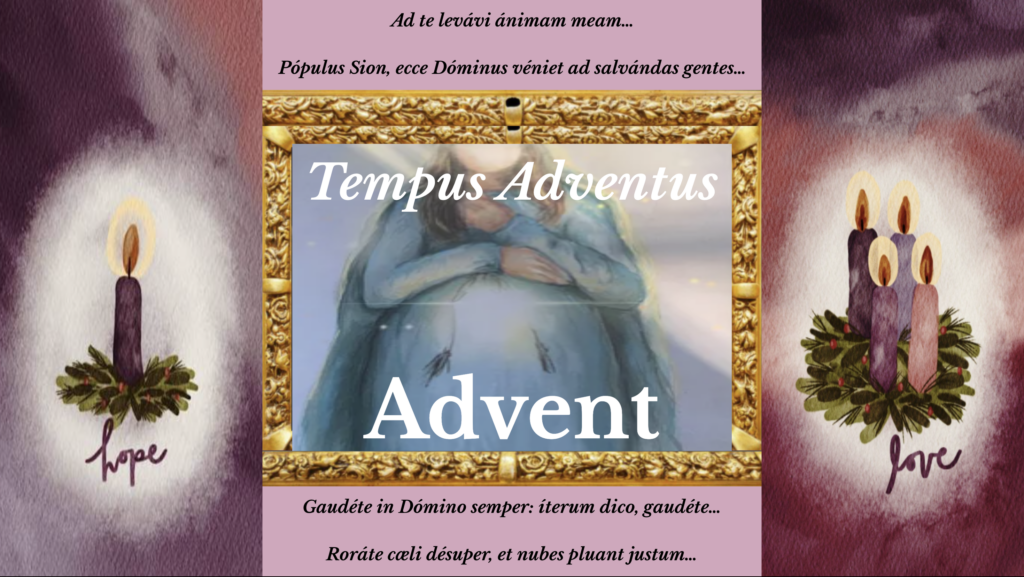
Advent (from “ad-venire” in Latin, meaning “to come to”) means “coming” or “arrival” and is the season encompassing the four Sundays (and weekdays) leading up to the celebration of Christmas (25 December).
Name in Traditional Liturgy: Tempus Adventus (the Season of Advent)
Season Preceding Advent: Ordinary Time
Commences: Four Sundays Before Christmas
Final Days: The final days of Advent, from December 17 to December 24, focus particularly on our preparation for the celebrations of the Nativity of our Lord (Christmas).
Ends: 24 December
The Catechism and Advent
The Catechism of the Catholic Church stresses the two-fold meaning of this coming: “When the Church celebrates the liturgy of Advent each year, she makes present this ancient expectancy of the Messiah, for by sharing in the long preparation for the Savior’s first coming, the faithful renew their ardent desire for His second coming” (No. 524).
Ancient Expectancy (CCC 524): Reliving the long historical wait for the Savior’s birth in Bethlehem.
Second Coming (CCC 522): Renewing the deep hope and readiness for Christ’s return at the end of time.
Preparation of History (CCC 522-523): Remembering how God prepared all of human history and sent John the Baptist to make ready the way for Jesus.
Sundays of Advent
First Sunday of Advent: Hope
Name in Traditional Liturgy: Dominica I Adventus, Ad Te Levavi (To you I have lifted up)
Latin: Derived from Psalm 25 (24):1–3 (“Ad te levavi animam meam: Deus meus, in te confido, non erubescam…”).
Name of Advent Candle: The Prophecy Candle
Color of Advent Candle: Symbolized by the first purple/violet candle, representing the prophets and trust in God’s promise.
Liturgical Color: Purple or violet (a time of quiet waiting, penance, and preparation for the coming of Jesus).
Office: Psalter Week I
Second Sunday: Peace
Name in Traditional Liturgy: Dominica II Adventus, Populus Sion (People of Zion)
Latin: Derived from the Book of Isaiah, such as Isaiah 30:30 and 62:11, with Psalm 80 (“People of Zion, behold, the Lord will come to save the nations, and the Lord will make the glory of his voice to be heard in the joy of your heart).
Name of Advent Candle: Bethlehem Candle or the Candle of Peace
Color of Advent Candle: Symbolized by the second purple candle, representing Bethlehem and the call to conversion.
Liturgical Color: Purple or violet (a time of quiet waiting, penance, and preparation for the coming of Jesus).
Office: Psalter Week II
Third Sunday: Joy
Name in Traditional Liturgy: Guadete (Rejoice)
Latin: Derived from the entrance antiphon of the day’s Mass (gaudete in Domino semper) based on Philippians 4:4: “Rejoice in the Lord always.”
Name of Advent Candle: Gaudete Candle
Color of Advent Candle: Symbolized by the pink/rose candle on Gaudete Sunday, marking a shift toward rejoicing because Christmas is near.
Liturgical Color: Rose or Pink (marks a joyful pause halfway through the penitential season of Advent).
Office: Beginning on December 17 (which frequently falls during the third week of Advent), the O Antiphons of Advent provide unique, profound messianic titles for Christ leading right up to Christmas Eve
Fourth Sunday: Love
Name in Traditional Liturgy: Dominica Quarta in Adventu or Dominica IV Adventus or Rorate Sunday (Fourth Sunday or Drop Down Dew Sunday” or “Shower, O Heavens Sunday)
Latin: The Latin root for Rorate comes from rorare (meaning “to drip moisture” or “to rain dew”), which is derived from ros (“dew”). It originates from the Latin Vulgate text of Isaiah 45:8, “Rorate caeli desuper,” meaning “Drop down dew, ye heavens”.
Name of Advent Candle: Angel’s Candle or Candle of Love.
Color of Advent Candle: Symbolized by the final purple candle, reflecting God’s ultimate love in sending Jesus.
Liturgical Color: Purple or violet (a time of quiet waiting, penance, and preparation for the coming of Jesus).
Office: During the final days of the fourth week of Advent (specifically December 17–24), the Liturgy of the Hours (the official daily office of the church) incorporates the O Antiphons during Evening Prayer (Magnificat antiphons), alongside the regular proper prayers and readings of the season. The underlying psalter cycle for the Divine Office shifts depending on the specific liturgical calendar layout, often utilizing Psalter Week IV or special proper texts as Christmas Eve approaches.
The Advent Wreath
The word “Advent” comes from the Latin word “adventus,” which means “a coming, approach, arrival.” When we expect guests to arrive at our homes, we turn the lights on; we anticipate their arrival and welcome them with joy. In Advent, we prepare our homes and churches as we joyfully anticipate His arrival, and the light also gets brighter as we near Christmas day, the day on which the Light of the World was born. St. Gregory of Nyssa wrote, “Today, the darkness begins to grow shorter and the light to lengthen, as the hours of light become fewer. […] Do you see that the beams of light are more intense and the sun higher than it has been? Realize that the true light is now here and, through the rays of the Gospel, is illuminating the whole earth.”
Advent wreaths and candles are commonly seen in Catholic churches during the liturgical season. Many people also display Advent wreaths in their homes and light a candle each Sunday as families. Read more to learn about the history, traditions, and symbolism behind Advent wreaths and candles and how you can celebrate Advent at home with family and friends.
From: Hallow.com
Structure of Advent:
First Sunday of Advent
Type of Liturgical Day: High Precedence (Tabula Praecedentiae, Tabula Dierum Liturgicorum)
Name in Traditional Liturgy: Dominica I Adventus, Ad Te Levavi (To you I have lifted up)
Color: Purple or violet (a time of quiet waiting, penance, and preparation for the coming of Jesus).
Mass: The Gloria (“Glory to God”) is omitted during the Mass on the First Sunday of Advent, Lighting of the Advent Wreath
Office: Week I of the Standard Four-Week Psalter Cycle
Second Sunday of Advent
Type of Liturgical Day: High Precedence (Tabula Praecedentiae, Tabula Dierum Liturgicorum)
Name in Traditional Liturgy: Dominica II Adventus, Populus Sion (People of Zion)
Color: Purple or violet (a time of quiet waiting, penance, and preparation for the coming of Jesus).
Mass: The Gloria (“Glory to God”) is omitted during the Mass on the Second Sunday of Advent, Lighting of the Advent Wreath
Office: Week II of the Standard Four-Week Psalter Cycle
Third Sunday of Advent
Type of Liturgical Day: High Precedence (Tabula Praecedentiae, Tabula Dierum Liturgicorum)
Name in Traditional Liturgy: Gaudete
Color: Rose or Pink (marks a joyful pause halfway through the penitential season of Advent).
Mass: The Gloria (“Glory to God”) is omitted during the Mass on the Third Sunday of Advent, Lighting of the Advent Wreath
Office: Week III of the Standard Four-Week Psalter Cycle
Fourth Sunday of Advent
Type of Liturgical Day: High Precedence (Tabula Praecedentiae, Tabula Dierum Liturgicorum)
Name in Traditional Liturgy: Dominica Quarta in Adventu or Dominica IV Adventus
Color: Purple or violet (a time of quiet waiting, penance, and preparation for the coming of Jesus).
Mass: The Gloria (“Glory to God”) is omitted during the Mass on the Fourth Sunday of Advent, Lighting of the Advent Wreath
Office: Week IV of the Standard Four-Week Psalter Cycle
Feast of Saint Andrew the Apostle (30 November)
Type of Liturgical Day: Feast (Festum)
Name in Traditional Liturgy: Sancti Andreae Apostoli
Colors: Red
Mass: Gloria Added, Proper Collect, Preface of the Apostles Added
Office: Standard Four-Week Psalter Cycle
Commences: 30 November
Ends: 30 November (Midnight)
Feast of Saint Francis Xavier (3 December)
Type of Liturgical Day: Feast (Festum)
Name in Traditional Liturgy: Sancti Francisci Xaverii, Confessoris
Color: White
Office: Standard Four-Week Psalter Cycle
Commences: 3 December
Ends: 3 December (Midnight)
Feast of Saint Nicholas (6 December)
Type of Liturgical Day: Feast (Festum)
Name in Traditional Liturgy: Sancti Nicolai Episcopi et Confessoris
Color: White
Office: Standard Four-Week Psalter Cycle
Commences: 6 December
Ends: 6 December (Midnight)
Solemnity of the Immaculate of Conception
Type of Liturgical Day: Solemnity (Sollemnitas)
Name in Traditional Liturgy: In Conceptione Immaculata Beatae Mariae Virginis
Color: White (or Gold with a Regional Exception of Blue)
Mass: Gloria Added, Nicene Creed Added, Proper Collect, Proper Responsorial Psalm
Office: Proper Psalms (Pss Prop)
Commences: Evening of 7 December with First Vespers
Ends: 8 December (Midnight)
Feast of Our Lady of Guadalupe (12 December)
Type of Liturgical Day: Solemnity or Feast Depending on Country
Name in Traditional Liturgy: Beata Maria Virgo de Guadalupe, In festo B. M. V. de Guadalupe
Color: White (or Gold)
Mass: Specific Propers of Mass
Office: Common of the Blessed Virgin Mary and Standard Four-Week Psalter Cycle
Commences: 12 December
Ends: 12 December (Midnight)
Feast of Saint Lucy (13 December)
Type of Liturgical Day: Memorial (Memoria)
Name in Traditional Liturgy: Sanctae Luciae Virginis et Martyris
Color: Red
Mass: Specific Collect, Antiphons, Select Readings, Typical Eucharistic Mention,
Office: Standard Four-Week Psalter Cycle
Commences: 13 December
Ends: 13 December (Midnight)
Feast of Saint John of the Cross (13 December)
Type of Liturgical Day: Memorial (Memoria)
Name in Traditional Liturgy: Sancti Ioannis a Cruce Confessoris et Ecclesiae Doctoris
Color: White
Office: Standard Four-Week Psalter Cycle
Commences: 14 December
Ends: 14 December (Midnight)
Liturgical Colors of Advent
What does purple symbolize in Advent?
Purple symbolizes penance, preparation, and the royalty of Christ. Purple is the main Advent color. This color represents a time of introspection, prayer, and reflection, encouraging believers to prepare their hearts for the coming of Jesus. Purple is often associated with both royalty and repentance, signifying that Advent is not only a season of anticipation but also a period to recognize the need for inner renewal as we await the arrival of our King.
Church decorations and altar cloths – Many churches use purple altar cloths and banners to reflect the season’s tone of anticipation and preparation.
Clergy vestments – Priests often wear purple robes during Advent Masses to represent penance and the royal coming of Christ.
Advent wreath – Three of the four candles on the Advent wreath are purple. They symbolize hope, peace, and love in the lead-up to Christmas. The fourth candle, which is pink, symbolizes joy and is lit on the third Sunday, known as Gaudete Sunday.
What does rose (pink) symbolize in Advent?
In Advent, the rose (or pink) color symbolizes joy and rejoicing. Pink (or rose) is the second most common Advent color. It is used specifically on the third Sunday of Advent, known as “Gaudete Sunday.” The word Gaudete means “rejoice” in Latin, marking a joyful pause halfway through Advent’s more penitential season as Christmas draws nearer. The rose candle on the Advent wreath, often called the “Joy Candle,” reminds the faithful to rejoice in the promise of Christ’s coming. It is a day of hope, gratitude, and a renewed focus on the joy of the approaching Christmas celebration.
Where will we see rose in Advent?
We see pink primarily on Gaudete Sunday, the third Sunday of Advent. This color may appear in:
The Advent wreath: The third candle on the Advent wreath is pink, symbolizing joy as Christmas nears.
Priests’ vestments: On Gaudete Sunday, priests wear rose vestments to mark this joyful pause in the Advent season.
Church decorations: Some churches may add pink accents to altar decorations or other areas to reflect the joyful theme of the day.
These elements of rose signify a lightening of the penitential purple as Advent reaches its midpoint and Christmas draws closer. It is meant to be a joyful Advent color.
Google Images was used to collect the photographs on this page. The photographs do not belong to Global Catholic Resource Center©.

Share