
- About
- More Languages
- Coins for Convents: A Non-Profit Organization
- Mass & Eucharist
- Going to Catholic Mass for the First Time?
- List of Eucharistic Miracles
- Wearing a Veil to Catholic Mass (Veiling)
- Traditional Latin Mass (TLM), Tridentine Mass
- Catholic Prayers for the Eucharist
- Eucharistic Prayers of the Saints
- Catholic Mass
- Catholic Books on the Eucharist
- St. Carlo Acutis’ Website for Eucharistic Miracles
- Litany for the Blessed Sacrament
- Mary and Marian Apparitions
- New/Returning to Catholicism
- Welcome Home to the Catholic Church!
- First-Time Going to Mass?
- Steps For Becoming Catholic
- Books for New Catholics: Introduction to Catholicism, Catholic FAQs, & Basics
- Books: Conversions & Your Current Faith
- Books: Returning to Catholicism
- Roman Catholic Church vs. Other Christian Churches
- New to Catholicism: YouTube
- Holy Orders & Vocations to Religious Life
- Religious Life Resources for Parents
- Resources for Parents: Priesthood, Sisterhood, Brotherhood
- Parent FAQs on Catholic Religious Vocations
- Catholic Resources for Parents About Religious Life
- Websites for Parents about Fostering Catholic Religious Vocations
- How Parents Can Foster Catholic Religious Vocations at Home
- ABCs of Fostering Vocations (USCCB)
- Religious Vocation Prayers for Parents
- How Teachers Can Foster Catholic Religious Vocations at School
- Called to Religious & Consecrated Life?
- What’s Your Vocation?
- What is the Process of Catholic Formation for Religious Life?
- Discerner’s Packet
- Catholic Books for General Religious Life Discernment
- Catholic Websites for Religious Life & Holy Orders
- Catholic Films & Television: Consecrated Life
- Catholic YouTube Resources for Religious Life & Holy Orders
- Catholic Quotes on Religious Life
- Catholic Religious Orders and Religious Communities
- FAQs: Health Conditions & Holy Orders
- Support Consecrated Life & Vocations
- Catholic Resources for Cloistered Life
- Priesthood (Discernment Resources)
- Sisterhood (Discernment Resources)
- Brotherhood (Discernment Resources)
- Diaconate (Discernment Resources)
- Religious Life Resources for Parents
- Parents & Family
- Catholic Pregnancy Resources
- Catholic Adoption Resources
- Resources for Raising Children Catholic
- Roman Catholic Names for Children
- Fallen-Away Catholic Resources for Parents
- Parenting Books for Catholics
- Catholic Books for Fathers and Mothers
- Catholic Books: Single Parents & Divorcées
- Catholic Books for Grandparents & Godparents
- Adults & Adolescents
- Catholic Authors (List of Authors)
- Catholic Media & Culture
- Children & Infants
- Schools & Education
- The Catholic Ivy League (C.I.L.)
- List of Global Catholic Colleges & Universities
- Top Catholic Boarding Schools
- Best Catholic Schools in the U.S.
- Catholics Books for Educators & Education
- BEST EDUCATIONAL RESOURCE FOR PARENTS & GUARDIANS
- Catholic Homeschooling: Books & Resources
- Catholic Websites for Education
- Les Écoles Catholiques en France
- Church Clergy & Laity
- Catholic Apologetics
- Marriage & Relationships
- Health & Tribulations
- Digital Library
- Special Needs
- Animals & Pets
- Ecclesiastical Latin
- Find a Catholic Church
- How to Pray the Rosary
- Donate
Blog Archives
Catholic Saints & Blesseds for Adoption
July 30, 2026
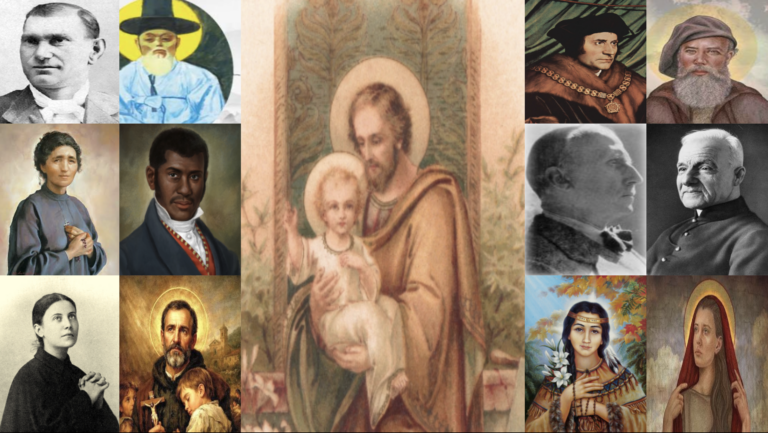
This is a list of saints and blesseds who adopted children, fostered children, or were adopted as children themselves.
Catholic Saints and Blesseds who Adopted Children
- Saint Joseph: Saint Joseph is the adoptive father of Jesus Christ.
- Blessed Ceferino Jimenez Malla (1861-1936): Bl. Ceferino and his wife adopted his wife’s niece, Pepita, when he was fifty years old.
- Blessed John and Magdalena Minami (1568-1603, 1560-1603): Blessed John and Magdalena Minami adopted Blessed John Minami’s nephew (St. Louis Minami).
- Saint Mark Chong Ui-Bae (1794-1866): St. Mark Chong Ui-Bae adopted his wife’s nephew.
- Saint Thomas More (1478-1535): St. Thomas More was the adoptive Father to Margaret Giggs, the daughter of a wet nurse (Olive Giggs) who tended to his biological daughter, Margaret More.
- Saint William of Perth (d. 1201): Saint William of Perth adopted an abandoned infant found on a church threshold. He named him David and raised him as his own son.
Saints and Blesseds Who Adopted and Fostered Children
- Blessed Eurosia Fabris (1866-1932): When her neighbor died and left behind two daughters, Blessed Eurosia cared for the children for six months before adopting them. She then gave birth to six children with her husband and adopted three more.
- Venerable Pierre Toussaint (1766-1853): Ven. Pierre Toussaint and his wife adopted Ven. Pierre’s niece after her mother’s death, had many foster children, and purchased the freedom of dozens of slaves.
Saints and Blesseds Who Were Orphaned as Children
- Blessed Luigi Beltrame Quattrocchi (1880-1951): Blessed Luigi Beltrame Quattrocchi was adopted at age eleven by a childless aunt and uncle.
- Saint André Bessette: Saint André Bessette was orphaned at the age of twelve, following the death of his father in a lumber accident and the death of his mother from Tuberculosis. His maternal aunt and her husband took him in.
- Saint Gemma Galgani (1878-1903): Saint Gemma Galgani lost her mother to Tuberculosis as a young child and lost her father to throat cancer as a teenager. The Giannini family informally adopted Saint Gemma Galgani into their household as a daughter.
- St. Jerome Emiliani (1486-1537): Saint Jerome Emiliani was orphaned around the ages of ten to fifteen after his father died. He joined the military shortly after his father’s death.
- Saint John Yi Mun-u (1810-1840): St. John Yi Mun-u was orphaned when he was just five years old. A Catholic woman adopted him.
- Saint Kateri Tekakwitha (1656-1937): Saint Kateri Tekakwitha was orphaned around the age of four via a smallpox epidemic that claimed the lives of her parents and her brother. She was raised by her uncle.
- Saint Mary of Edessa (d. 371): St. Mary of Edessa was orphaned at the age of 7. She was adopted by her uncle, the hermit, St. Abraham Kidunaia. When she fell into sin, St. Abraham left his hermitage for the first time in 20 years to find her. Her father’s love showed Mary her Father’s love, and she agreed to come home. She soon became a miracle worker.
To Read More about Saints of Adoption and Fostering, read: 15 Saints for adoption

Catholic Prayers for Adoption
July 30, 2026
Saint Jerome Emiliani Adoption Prayer
Oh God, Father of Mercy, that made Saint Jerome Emiliani a father and protector to the orphans, by his intercession, help us faithfully keep the spirit of adoption, through which we are called your children and indeed we are. In the name of Jesus Christ, your Son, in the unity of the Holy Spirit. Amen.
Adoption Prayer
Father, Son, and Holy Spirit,
You are one God, living in a relationship
of love.
When Christ became Man,
you shared that divine love with the
human race, forever wedding earth to heaven.
Send your blessings upon all who nurture
children who have been adopted.
Give them generous and
understanding hearts.
Give us all a spirit of understanding and welcome
so that all peoples of every nation, race, and tongue
may live together peacefully as members of your family.
Grant this through Christ our Lord. Amen.
Petition to St. Joseph
Blessed Joseph,
You took Mary and Jesus into your
home. You followed the prescripts of the Law,
presented Jesus in the Temple,
taught him skills at the plane and the lathe, and,
daily, you shared traditions which were built on the
covenants he came to fulfill.
Hear the prayers of the siblings, grandparents,
aunts, uncles, and entire families of children who
have been adopted.
May they be a source of loving welcome and a
fount of faith.
Through Christ our Lord.
St. Joseph, descendant of David, pray for us.
Powered By EmbedPress
Catholic Books and Websites for Adoption
July 30, 2026
Catholic Books on Adoption
Adoption: Choosing It, Living It, Loving It by Dr. Ray Guarendi (2009)
Adoption: Home Where You Belong: Catholic for a Reason IV by Jeff Cavins and Emily Cavins (2007)
Adoption: Room for One More? by Jaymie Stuart Wolfe (2015)
Adoption: Should You, Could You, and Then What?: Straight Answers from a Psychologist and Adoptive Father of Ten by Dr. Ray Guarendi (2021)
Blessed by Adoption: One Mom’s Stories, Scriptures, and Prayers to Comfort You and Remind You That You’re Not Alone by Hillary Froning (2020)
I Will Come to You: A Story of Adoption and the Relentless Love of God by Jamie McAleer (2025)
Outnumbered!: Raising 13 Kids with Humor and Prayer by Mary Ann Kuharski (2006)
Catholic Websites on Adoption
Adoption: Catholic Adopt Project
Fostering and Adoption: Springs of Love
Support and Learn: Catholic Children’s Aid Foundation Canada
List of Eucharistic Miracles
June 21, 2026
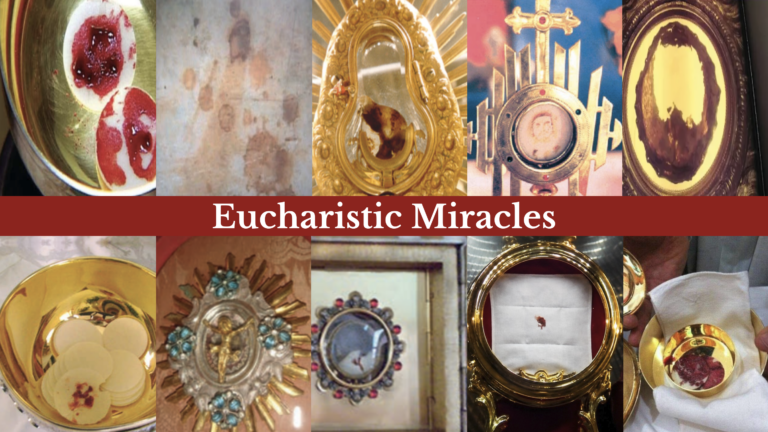
As of 2026, there are over 100 Eucharistic Miracles officially recognized by the Vatican.
To view Saint Carlo Acutis’ website on the Eucharistic miracles, click on the blue links. For certain miracles, you will have to scroll down to the appropriate miracle.
Carlo Acutis Eucharistic Miracles Booklet
Books on the Eucharist
Eucharistic Miracles around the World:
Argentina (Buenos Aires, 1922, 1994, 1996)
Austria (Fiecht, 1310)
Austria (Seefeld, 1384)
Austria (Weiten-Raxendorf, 1411)
Belgium (Bois-Seigneur-Issac, 1405)
Belgium (Bruges, 1203)
Belgium (Brussels, 1370)
Belgium (Herentals, 1412)
Belgium (Herkenrode-Hasselt, 1317)
Belgium (Liège, 1374)
Belgium (Middleburg-Lovanio, 1374)
Colombia (Tumaco, 1906)
Croatia (Ludbreg, 1411)
Egypt (St. Mary of Egypt, 7th Century)
Egypt (Scete, 3rd Century and 5th Century)
France (Avignon, 1433)
France (Blanot, 1331)
France (Bordeaux, 1822)
France (Dijon, 1430)
France (Douai, 1254)
France (Faverney, 1608)
France (La Rochelle, 1461)
France (Neuvy Saint Sepulcre, 1257)
France (Les Ulmes, 1668)
France (Marseille-En-Beauvais, 1533)
France (Paris, 1290)
France (Pressac, 1643)
Germany (Augsburg, 1194)
Germany (Benningen, 1216)
Germany (Bettbrunn, 1125)
Germany (Erding, 1417)
Germany (Kranenburg, 1280)
Germany (Regensburg, 1255)
Germany (Walldürn, 1330)
Germany (Weingarten)
Germany (Wilsnack, 1383)
India (Chirattakonam, 2001)
Martinique (Morne-Rouge, 1902)
Reunion Islands (Saint-André de la Réunion, 1902)
Italy (Alatri, 1228)
Italy (Saint Clare of Assisi, 1240)
Italy (Asti, 1535)
Italy (Bagno di Romagna, 1412)
Italy (Bolsena, 1264)
Italy (Canosio, 1630)
Italy (Cascia, 1330)
Italy (Cava dei Tirreni, 1656)
Italy (Dronero, 1631)
Italy (San Mauro La Bruca, 1969)
Italy (Ferrara, 1171)
Italy (Florence, 1230, 1595)
Italy (Gruaro, Valvasone, 1294)
Italy (Lanciano, 750 A.D.)
Italy (Macerata, 1356)
Italy (Mogoro, 1604)
Italy (Morrovalle, 1560)
Italy (Offida, 1273, 1280)
Italy (Patierno, Naples, 1772)
Italy (Rimini, 1227)
Italy (Rome, 6th Century and 7th Century)
Italy (Rome, 1610)
Italy (Rosano, 1948)
Italy (St. Peter Damian, 11th Century)
Italy (Salzano, 1517)
Italy (Scala, 1732)
Italy (Siena, 1730)
Italy (Trani, 11th Century)
Italy (Turin, 1453)
Italy (Turin, 1640)
Italy (Veroli, 1570)
Italy (Volterra, 1472)
Mexico (Tixtla, 2006)
Holland (Alkmaar, 1429)
Holland (Amsterdam, 1345)
Holland (Bergen, 1421)
Holland (Boxmeer, 1400)
Holland (Boxtel-Hoogstraten, 1380)
Holland (Breda-Niervaart, 1300)
Holland (Meerssen, 1222-1465)
Holland (Stiphout, 1342)
Peru (Eten, 1649)
Poland (Kraków, 1345)
Poland (Głotowo, 1290)
Poland (Legnica, 2013)
Poland (Poznań, 1399)
Poland (Sokółka, 2008)
Portugal (Santarém, 1247)
Spain (Alboraya-Almacéra, 1348)
Spain (Alcalá)
Spain (Alcoy, 1568)
Spain (Caravaca de la Cruz, 1231)
Spain (Cimballa, 1370)
Spain (Daroca, 1239)
Spain (Gerona, 1297)
Spain (Gorkum-El Escorial, 1572)
Spain (Guadalupe, 1420)
Spain (Ivorra, 1010)
Spain (Moncada, 1392)
Spain (Montserrat, 1657)
Spain (O’Cebreiro, 1300)
Spain (Onil, 1824)
Spain (Ponferrada, 1533)
Spain (St. John of the Abbesses, 1251)
Spain (Silla, 1907)
Spain (Valencia)
Spain (Zaragoza, 1427)
Switzerland (Ettiswil, 1447)
Venezuela (Betania, 1991)
Saints, Mystics and the Eucharist
Saint Margaret Mary Alacoque (Sacred Heart of Jesus, 17th Century)
Saint Thomas Aquinas (1224-1274)
Saint Francis of Assisi (13th Century)
Saint Bernard of Chiaravalle (12th Century)
San Giovanni (John) Bosco (1848)
Saint Germaine Cousin (Pibrac, 1589)
Saint Egidio
Saint Stanislaus Kostka (1550-1568)
Saint Fuastina Kowalska (20th Century)
Saint Satyrus (4th Century)
Saint Catherine of Siena (1347-1380)
Blessed Alexandria Maria da Costa (1904-1955)
Blessed Anne Catherine Emmerich (1774-1824)
Blessed Mary of the Passion (1866-1912)
Blessed Nicholas Steno (in Danish)
St. Nicholas of Flue (1417)
Servant of God Anne-Louise Lateau (1850)
Servant of God Marthe Robin (1902-1981)
André Frossard (20th Century)
Teresa Neumann (1898-1962)
Our Lady and the Eucharist:
Calanda (Spain, Miguel-Juan Pellicer, 1640)
Fatima (Portugal, The Angel of Peace, 1916)
Guadalupe (Mexico, Juan Diego, 1531)
Lourdes (France, Saint Bernadette, 1888)
Paris (France, Saint Catherine Labouré, 1830)
Miraculous Communions:
Blessed Angela of Foligno
Blessed Emilia Bicchieri
Blessed Imelda Lambertini
Blessed James of Montieri
Blessed Thomas of Cori
Saint Agnes Segni
Saint Bernard
Saint Bonaventure
Saint Clare Montefalco
Saint Frances of Rome
Saint Gerard Magella
Saint Gregory the Great
Saint Jerome
Saint Juliana Falconieri
Saint Lucia Filippini
Saint Maria Francesca of the Five Wounds
Saint Secondo
Saint Teresa of Avila
Catholic Books on the Eucharist
June 21, 2026
Please click on the links below to be taken to the appropriate page. Thank you.
The Eucharist Books
Eucharistic Adoration and Meditation Books
Eucharistic Miracles Books
Catholic Books on Prayer for Children
Books for Children about the Rosary:
A Child’s Treasure: Rosary Meditations for Children (Elsa Schiavone, Derek Rebello, Michael Boas, 2013)
Annabelle Lee Prays the Rosary by Louisa Mastromarino (2025)
Bead by Bead: The Glorious Mysteries of the Rosary for Children (Bead by Bead: The Rosary for Children) by Stephanie Engelman (2025)
Bead by Bead: The Joyful Mysteries of the Rosary for Children (Bead by Bead: The Rosary for Children) by Stephanie Engelman (2025)
Bead by Bead: The Sorrowful Mysteries of the Rosary for Children (Bead by Bead: The Rosary for Children) by Stephanie Engelman (2020)
Caitlyn and Peter’s Rosary Adventures by Theresa Linden
Catholic Rosary and Prayer Book: An Easy, Illustrated Rosary and Prayer Companion for Children, Teens, and Adults by Elle Ford (2025)
Catholic Word Find: All About the Rosary: A Devotional Activity Book for Kids and Adults by Holy Family Books
Child’s Guide to the Rosary by Elizabeth Ficocelli (2009)
Easy Readers for Catholic Kids: The Rosary by Kimberly Fries (2020)
Holy Rosary Activity Book for Catholic Kids: 100 Activities, Including Bible Stories, Word Searches, and Coloring Pages, and More, that turn the Rosary Mysteries into Adventure for Catholic Kids by Proud Catholic Press (2026)
How to Pray the Rosary: Beautiful Guide for Kids by Stella Fidei (2026)
How to Pray the Rosary for Beginners: A Simple Guide to Teaching Children the Mysteries, Prayers, and Meaning of the Holy Rosary by Leo Anthony (2025)
How to Pray the Rosary for Children with Color Art Masterpieces for the 20 Mysteries by Kathryn Marcellino (2019)
How to Pray the Rosary for Kids: A Step-by-Step Guide by Hannah Smith (2025)
How to Pray the Rosary: Learn, Pray, Grow with God by Jeannette Gianola (2026)
How to Pray the Rosary for Kids Ages 5 to 9: A Child-Friendly Catholic Devotion Guide with Simple Lessons and Holy Mysteries by Keryl Matheus (2026)
I Pray the Rosary by Margaret Rose Scarfi (2005)
Latin Prayers of the Rosary Coloring Book by Robert F. Kauffmann (2023)
Learn How to Pray the Rosary: An Interactive Guide for Catholic Children by Cassie Longhem (2024)
Learn the Mass and Rosary: An Interactive Guide for Catholic Children by Cassie Longhem (2024)
Learn to Pray the Rosary for Children: An Easy Catholic Guide to the Mysteries for Kids by Dorothy B. Neal (2024)
Let’s Pray the Rosary by Mauricette Vial-Andru and Emmanuel Beaudesson (2015)
Little Hands, Big Prayers: A Child’s Rosary Book by Ivelitza Roldan-Syvanen (2026)
Little Lucy Prays the Rosary by Estelle Nester (2025)
Mary Holds My Hand: A Child’s Book of Rosary Mediations by Michele E. Chronister (2015)
My First Interactive Rosary Book by Candace Camling (2025)
Mysteries of The Holy Rosary: The Life of Jesus and Mary by Jane Morrone and Heather Lean (2023)
Mysteries of the Rosary by Michael O’Neill McGrath (2008)
OSV Kids: The Rosary by Colleen Pressprich (2025)
Our Lady of Fatima by Father Lawrence G. Lovasick S.V.D. (1984)
Pray and Think: Imaginative Rosary Book by Candace Camling (2021)
Praying the Rosary Activity Book by Four Sisters (2023)
Rosary Coloring Book by Lawrence G. Lovesick and Emma C. McKean (1981)
Rosary Coloring Book for Kids Ages 4–8: Catholic Illustrations Inspired by the Mysteries of the Rosary by Edouard Boulay (2026)
Rosary Look & Find: A Catholic Seek and Spy Adventure by Little Luminaries Press (2026)
Rosary Quest: The Joyful Mysteries by Maria Rose Fries (2025)
Roses for Mary: The Holy Rosary for Little Hearts by Renee M. Simeon (2026)
Saint Dominic and the Rosary by Catherine Beebe (1996)
Scriptural Rosary for Children by Reverend Jude Winkler O.F.M. (2008)
The Holy Rosary by Reverend Lawrence G. Lovasik S.V.D. (2011)
The Illustrated Rosary for Children by Karen Cavanaugh (2006)
The Little Brown Scapular and the Rosary Children’s Book by Francine Calabrese (2026)
The Mysteries of The Holy Rosary Illustrated by Andrea Maglio-Macullar (2017)
The Rosary for Children by Karen Cavanaugh (2003)
The Rosary for Little Ones by Kimberly Fries (2019)
Please Download the Resources Below to Print. God bless!
Powered By EmbedPress
Powered By EmbedPress
Powered By EmbedPress
Powered By EmbedPress
Powered By EmbedPress
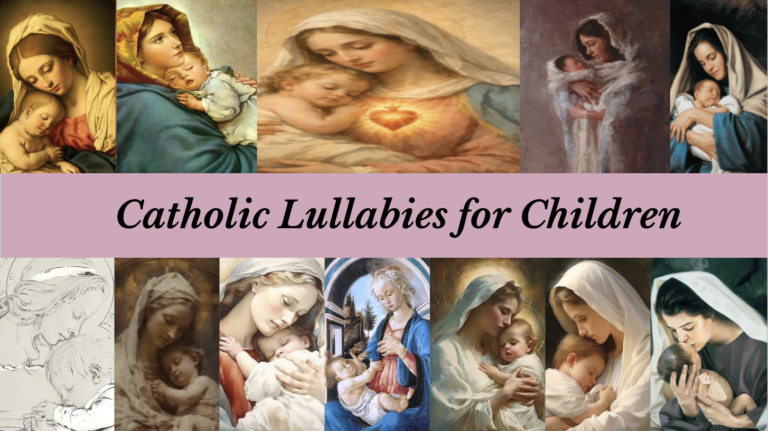
A Catholic Mother’s Lullaby
Lullaby, oh, Lullaby.
My beautiful darlings sleep.
May they know Christ’s love
All their many days.
What God gave, may He keep.
Will He watch over these
My little little ones
My darlings
My greatest ___#_of children__ blessings.
Lullaby, oh, Lullaby.
My beautiful darlings sleep.
May they know the love of Christ’s Church.
All their many days.
May You guide them to know
Your Catholic Church is our home.
God bless these
My darlings
My greatest ___#_of children__ blessings.
Come to Me, Gentle Lady
Stand by my side in the dark of night.
Please stand by my side in my greatest fright.
Come to me, come to me, gentle lady.
Hold my hand as they walk this path.
Please lead me down this narrow path.
My eyes are so heavy.
My head longs for sleep.
My heart longs for rest.
Be my mother now.
Oh come, sweet lady, sweet mother of love.
Lead me to you.
Lead me to Your Son.
Come to me, come to me, gentle lady.
Stand by my side in the dark of night.
Please bring me peace this very night.
Dona Nobis Pacem (Lullaby Variation)
Dona nobis pacem, pacem
Dona nobis pacem
Dona nobis pacem, pacem
Dona nobis pacem
Dona nobis pacem, pacem
Dona nobis pacem
Dona nobis pacem, pacem
Dona nobis pacem
Dona nobis pacem, pacem
Dona nobis pacem
Dona nobis pacem, pacem
Dona nobis pacem
Dona nobis pacem, pacem
Dona nobis pacem.
Frère Jacques (Are You Sleeping)
Frère Jacques, Frère Jacques,
Dormez-vous? Dormez-vous?
Sonnez les matines, sonnez les matines
Ding dang dong, ding dang dong.
Are you sleeping, are you sleeping?
Brother John, Brother John?
Morning bells are ringing, morning bells are ringing
Ding dang dong, ding dang dong.
When I Close the Door (Catholic Lullaby)
No need to fear the dark.
No need to be frightened when I close the door.
For I have asked a lady
A special one
To watch over you.
She is a mother, too.
And She knows how much you mean to me.
She will stand by your side when I cannot.
You will not be alone.
For She loves You, as I do.
She loves You and so does Her Son.
No need for a candle, my darling one.
She will bring the light wherever She goes.
No need to fear the dark.
No need to be frightened when I close the door.
For the Lady of goodness, of sweetness, and love is by your side.
All through the night.
For She loves You, as I do.
She loves You and so does Her Son.
Praying the Rosary in Latin
May 30, 2026
Praying the Rosary in Latin
Resources for Praying in Latin:
Praying Latin
Hallow: How to Pray the Latin Rosary
Traditional Catholic Prayers: Praying the Rosary in Latin
The Joyful Mysteries of the Rosary: Mysteria Gaudiosi
The Sorrowful Mysteries: Mysteria Dolorosa
The Glorious Mysteries: Mysteria Gloriosa
The Luminous Mysteries: Mysteria Luminosa
Sign of the Cross | In nómine Patris, et Fílii, et Spíritus Sancti. Amen. |
Apostles Creed | Credo in Deum Patrem omnipoténtem, Creatórem cæli et terræ. Et in Iesum Christum, Fílium eius únicum, Dóminum nostrum, qui concéptus est de Spíritu Sancto, natus ex María Vírgine, passus sub Póntio Piláto, crucifíxus, mórtuus, et sepúltus, descéndit ad ínfernos, tértia die resurréxit a mórtuis, ascéndit ad cælos, sedet ad déxteram Dei Patris omnipoténtis, inde ventúrus est iudicáre vivos et mórtuos. Credo in Spíritum Sanctum, sanctam Ecclésiam cathólicam, sanctórum communiónem, remissiónem peccatórum, carnis resurrectiónem, vitam ætérnam. Amen. |
Our Father | Pater noster, qui es in cælis, sanctificétur nomen tuum. Advéniat regnum tuum. Fiat volúntas tua, sicut in cælo, et in terra. Panem nostrum cotidiánum da nobis hódie, et dimítte nobis débita nostra sicut et nos dimíttimus debitóribus nostris. Et ne nos indúcas in tentatiónem, sed líbera nos a malo. Amen. |
Hail Mary | Ave María, grátia plena, Dóminus tecum. Benedícta tu in muliéribus, et benedíctus fructus ventris tui, Iesus. Sancta María, Mater Dei, ora pro nobis peccatóribus, nunc, et in hora mortis nostræ. Amen. |
Glory Be | Glória Patri, et Fílio, et Spirítui Sancto. Sicut erat in princípio, et nunc, et semper, et in sæcula sæculórum. Amen. |
Oh My Jesus | Domine Iesu, dimitte nobis debita nostra, salva nos ab igne inferiori, perduc in cælum omnes animas, præsertim eas, quæ misericordiæ tuæ maxime indigent. Amen. |
Hail Holy Queen | Salve Regína, Mater misericórdiæ; Vita dulcédo, et spes nostra, salve. Ad te Clamámus éxsules fílii Evæ; Ad te Suspirámus, geméntes et flentes in hac lacrimárum valle. Eia ergo, Advocáta nostra, Illos tuos misericórdes óculos ad nos convérte: Et Iesum, benedíctum fructum ventris tui, Nobis post hoc exsílium osténde. O clemens, o pia, o dulcis Virgo María. V/. Ora pro nobis, Sancta Dei Génetrix. R/. Ut digni efficiámur promissionibus Christi. Amen. |
Final Prayer | Oremus: Deus, cujus Unigénitus, per vitam, mortem et resurrectiónem suam nobis salútis ætérnæ præmia comparávit: concéde, quæsumus; ut, hæc mystéria sanctíssimo beátæ Maríæ Virginis Rosário recoléntes; et imitémur quod cóntinent, et quod promíttunt, assequámur. Per eúmdem Christum Dóminum nostrum. Amen. |
Joyful Mysteries of the Rosary: Mysteria Gaudiosi
The Annunciation, The First Joyful Mystery: Annuntiatio (Primum Mysterium Gaudiosum).
The Visitation, The Second Mystery: Visitatio (Secundum Mysterium Gaudiosum).
Nativity, The Third Joyful Mystery: Nativitas (Tertium Mysterium Gaudiosum: Nativitas).
Presentation, The Fourth Joyful Mystery: Presentatio (Quartum Mysterium Gaudiosum).
Finding the Temple, The Fifth Joyful Mystery: Inventio in Templo (Quintum Mysterium Gaudiosum).
The Sorrowful Mysteries: Mysteria Dolorosa
The Agony in the Garden, The First Sorrowful Mystery: Cruciatus in Horto (Primum Mysterium Dolorosum).
The Scourging, The Second Sorrowful Mystery: Flagellatio (Secundum Mysterium Dolorosum).
Crowning with Thorns, The Third Sorrowful Mystery: Coronatio cum Spinis (Tertium Mysterium Dolorosum).
Carrying of the Cross, The Fourth Sorrowful Mystery: Bajulatio Crucis (Quartum Mysterium Dolorosum).
Crucifixion, The Fifth Sorrowful Mystery: Crucifixio (Quintum Mysterium Dolorosum).
The Glorious Mysteries: Mysteria Gloriosa
The Agony in the Garden, The First Sorrowful Mystery: Cruciatus in Horto (Primum Mysterium Dolorosum).
The Scourging, The Second Sorrowful Mystery: Flagellatio (Secundum Mysterium Dolorosum).
Crowning with Thorns, The Third Sorrowful Mystery: Coronatio cum Spinis (Tertium Mysterium Dolorosum).
Carrying of the Cross, The Fourth Sorrowful Mystery: Bajulatio Crucis (Quartum Mysterium Dolorosum).
Crucifixion, The Fifth Sorrowful Mystery: Crucifixio (Quintum Mysterium Dolorosum).
The Luminous Mysteries: Mysteria Luminosa
The Resurrection, The First Glorious Mystery: Resurrectio (Primum Mysterium Gloriosum).
The Ascension, The Second Glorious Mystery: Ascensio (Secundum Mysterium Gloriosum).
Descent of the Holy Ghost, The Third Glorious Mystery: Descensus Spiritus Sancti (Tertium Mysterium Gloriosum).
The Assumption, The Fourth Glorious Mystery: Assumptio (Quartum Mysterium Gloriosum).
The Coronation, The Fifth Glorious Mystery: Coronatio (Quintum Mysterium Gloriosum).
Catholic Words in Ecclesiastical Latin
May 26, 2026
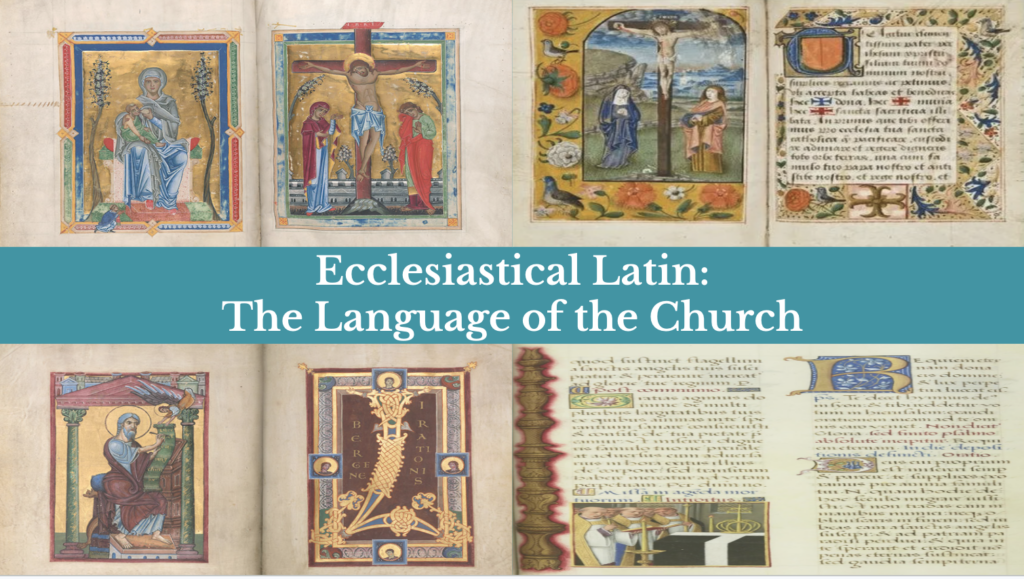
Ecclesiastical Latin
The Body of Christ: Corpus Christi
The Blood of Christ: Sanguis Christi.
The Rosary:
Visit the Page: Praying the Rosary in Latin
Joyful Mysteries of the Rosary: Mysteria Gaudiosi
The Sorrowful Mysteries: Mysteria Dolorosa
The Glorious Mysteries: Mysteria Gloriosa
The Luminous Mysteries: Mysteria Luminosa
A reading from the holy Gospel according to: Lectio sancti Evangélii secundum…
Almighty God: Omnípotens Deus.
All you holy men and women, pray for us: Omnes Sancti et Sanctae Dei, orate pro nobis.
And became man: Et homo factus est.
And one Holy, Catholic, and Apostolic Church: Et unam, sanctam, cathólicam et apostólicam Ecclésiam.
And the life of the world to come: Et vitam ventúri sæculi.
And with your spirit: Et cum spíritu tuo.
Angel of God: Ángele Dei.
Angels of God: Angeli Dei.
Apostolic Exhortation: Adhortatio Apostolica.
Apostolic Succesion: Successio apostolica.
At the Savior’s command and formed by divine teaching, we dare to say: Præcéptis salutáribus móniiti, et divína institutióne formáti, audémus dícere…
Baptism: Baptismus.
Beatification: Beatificatio.
Be pleased, O God, we pray, to bless, acknowledge, and approve this offering in every respect; make it spiritual and acceptable, so that it may become for us the Body and Blood of your most beloved Son, our Lord Jesus Christ: Quam oblatiónem tu, Deus, in ómnibus, quæsumus, benedíctam, adscríptam, ratam, rationábilem, acceptiabilémque fácere dignéris: ut nobis Corpus, et Sanguis fiat dilecctíssimi Fílii tui Dómini nostri Iesu Christi.
Be pleased to look upon them with serene and kindly countenance: Supra quæ propítio ac seréno vultu respícere dignéris.
Behold the Lamb of God, behold him who takes away the sins of the world. Blessed are those called to the supper of the Lamb: Ecce Agnus Dei, ecce qui tollit peccáta mundi. Beáti qui ad cenam Agni vocáti sunt.
Behold the wood of the Cross, on which hung the Saviour of the World: Ecce lignum Crucis, in quo salus mundi pependit.
Bless me, Father, for I have sinned: Benedic mihi, Pater, quia peccavi.
Bless us, O Lord: Benedíc nos Dómine.
Bless us, O Lord, and these Thy gifts, which we are about to receive from Thy bounty, through Christ our Lord. Amen: Benedic, Domine, nos et haec tua dona, quae de tua largitate sumus sumpturi, per Christum Dominum nostrum. Amen.
Blessed: Beatus (Male), Beata (Female).
Blessed are you, Lord God of all creation: Benedíctus es Dómine, Deus univérsi.
Blessed be God forever: Benedíctus Deus in sæcula.
Blessed be the name of the Lord: Sit nomen Domini Benedictum.
Blessed Mary, Mother of God: Beata Maria Mater Dei.
Bread of angels: Panis angelicus.
Bread of life: Panis vitae.
By the divine power of God: Divina virtute.
By Your cross and resurrection You have set us free: qui per crucem et resurrectiónem tuam liberásti nos.
Chair of Saint Peter: Cathedra Sancti Petri.
Christ conquers, Christ reigns, Christ commands: Christus vincit, Christus regnat, Christus imperat.
Christ hear us. Christ graciously hear us: Christe, audi nos. Christe, exaudi nos.
Christ have mercy: Christe eléison.
Christ is risen: Christus resurrexit.
Christendom (Christian Body): Corpus Christianum.
Cleanse my heart and my lips: Munda cor meum ac lábia mea.
Come, let us adore Him: Venite, adoremus.
Communion Rite: Ritus Communionis.
Confirmation: Confirmatio.
Consecrated Host: Hostia Consecrata.
Consecration: Consecratio.
Deliver us, Lord, we pray: Líbera nos, quæsumus, Domine.
Deliver us, Lord, we pray, from every evil, graciously grant peace in our days, that, by the help of your mercy, we may be always free from sin and safe from all distress, as we await the blessed hope and the coming of our Savior, Jesus Christ: Líbera nos, quæsumus, Dómine, ab ómnibus malis, da propítus pacem in diébus nostris, ut, ope misericórdiæ tuæ adiúti, et a peccáto simus semper líberi et ab omni perturbatióne secúri: exspectántes beátam spem et advéntum Salvatóris nostri Iesu Christi.
Divine Mercy: Divina Misericordia.
Do this in memory of me: Hoc fácite in meam commemoratiónem.
Eucharist (or Holy Communion): Eucharistia.
Eucharistic Adoration: Adoratio Eucharistica.
First Person of the Holy Trinity: Prima Persona Sanctissimae Trinitatis.
For the kingdom, the power and the glory are yours now and for ever: Quia tuum est regnum, et potéstas, et glória in sæcula.
Fruit of the vine and work of human hands: Fructus vitis et opus manuum hominum.
Full of Grace: Grātia plēna.
Glorifying the Lord by your life: …glorificando vita vestra Dominum.
Glory be to the Father, the Son, and the Holy Spirit: Gloria Patri, et Filio, et Spiritui Sancto.
Glory to God in the highest: Gloria in excelsis Deo.
Glory to you, O Lord: Glória tibi, Dómine.
Go in peace: Ite in pace.
God be with you: Deus tecum.
God be with you all: Deus vobiscum.
God bless them: Benedicat illis Deus.
God bless us: Benedicat nos Deus.
God bless you: Deus te benedicat.
God is good: Deus bonus est.
God is love: Deus caritas est.
Good shepherd. My great king. My everlasting salvation: Pastor bone, Rex meus magne, salus mea aeterna.
Grant us peace: Dona nobis pacem.
Hail, Holy Queen: Salve, Regina.
Hail, holy Queen, Mother of mercy, our life, our sweetness and our hope. To thee do we cry, poor banished children of Eve. To thee do we send up our sighs, mourning and weeping in this valley of tears. Turn, then, most gracious advocate, thine eyes of mercy toward us, and after this, our exile, show unto us the blessed fruit of thy womb, Jesus. O clement, O loving, O sweet Virgin Mary. V. Pray for us, O holy Mother of God. R. That we may be made worthy of the promises of Christ: Salve, Regina, mater misericordiae; vita, dulcedo et spes nostra, salve. Ad te clamamus exsules filii Hevae. Ad te suspiramus gementes et flentes in hac lacrimarum valle. Eia ergo, advocata nostra, illos tuos misericordes oculos ad nos converte. Et Iesum, benedictum fructum ventris tui, nobis post hoc exsilium ostende. O clemens, o pia, o dulcis Virgo Maria. V. Ora pro nobis, sancta Dei Genitrix. R. Ut digni efficamur promissionibus Christi.
Hail Mary: Ave Maria.
Hail, Mary, full of grace, the Lord is with thee; blessed art thou amongst women, and blessed is the fruit of thy womb, Jesus. Holy Mary, Mother of God, pray for us sinners, now and at the hour of our death. Amen: Áve María, grátia pléna, Dóminus técum. Benedícta tu in muliéribus, et benedíctus frúctus véntris túi, Iésus. Sáncta María, Máter Déi, óra pro nóbis peccatóribus, nunc et in hóra mórtis nóstrae. Amen.
Happy Christmas: Felicem Natalem Christi!
Have mercy on me: Miserere mei.
Have mercy on us, for we have sinned: Miserére nostri, Dómine, quia peccávimus tibi.
Holy, Holy, Holy, Lord God of hosts. Heaven and earth are full of Your glory. Hosanna in the highest! Blessed is He who comes in the name of the Lord. Hosanna in the highest: Sanctus, Sanctus, Sanctus, Dominus Deus Sabaoth. Pleni sunt caeli et terra gloria tua. Hosanna in excelsis. Benedictus qui venit in nomine Domini. Hosanna in excelsis.
Holy Father: Sanctissimus Pater, Sanctissime Pater.
Holy Trinity: Sancta Trinitas.
Holy Water: Aqua benedicta.
Homily: Homilia.
I absolve you (of your sins): Ego te absolvo.
I believe in one God: Credo in unum Deum.
I believe in God the Father almighty, Creator of heaven and earth. And in Jesus Christ, His only Son, our Lord, Who was conceived by the Holy Spirit, born of the Virgin Mary, suffered under Pontius Pilate, was crucified, died, and was buried. He descended into hell; the third day He rose again from the dead; He ascended into heaven, and sits at the right hand of God the Father almighty, from thence He shall come to judge the living and the dead. I believe in the Holy Spirit, the holy Catholic Church, the communion of saints, the forgiveness of sins, the resurrection of the body and life everlasting. Amen: Credo in Deum Patrem omnipotentem, Creatorem caeli et terrae. Et in Iesum Christum, Filium eius unicum, Dominum nostrum, qui conceptus est de Spiritu Sancto, natus ex Maria Virgine, passus sub Pontio Pilato, crucifixus, mortuus, et sepultus, descendit ad inferos, tertia die resurrexit a mortuis, ascendit ad caelos, sedet ad dexteram Dei Patris omnipotentis, inde venturus est iudicare vivos et mortuos. Credo in Spiritum Sanctum, sanctam Ecclesiam catholicam, sanctorum communionem, remissionem peccatorum, carnis resurrectionem, vitam aeternam. Amen.
I confess: Confíteor.
I confess one baptism for the forgiveness of sins: Confíteor unum baptísma in remissiónem peccatórum.
I look forward to the resurrection of the body: Et expécto resurrectiónem mortuórum.
I shall not want: Et nihil mihi deerit.
Immaculate Conception: Immaculata Conceptio.
In a similar way, when supper was ended, he took this precious chalice in his holy and venerable hands, and once more giving you thanks, he said the blessing and gave the chalice to his disciples saying: Símili modo postquam cænátum est, accípens et hunc præclárum Cálicem in sanctus ac venerábiles manus suas: item tibi grátias agens, benedíxit, dedítque discípulis suis, dicens:
Take this, all of you, and drink from it, for this is the the chalice of my blood, the blood of the new and eternal covenant, which will be poured out for you and for many for the forgiveness of sins: Accípite, et bíbte ex eo omnes, hic est enim calix sánguinis Mei, novi et ætérni testaménti: Qui pro vobis et pro multis effundétur in remissiónem peccatórum.
In Heaven and on Earth: In caelo et in terra.
In the name of the Father, and of the Son, and of the Holy Spirit: In nomine Patris et Filii, et Spiritus Sancti.
It will become for us the bread of life: ex quo nobis fiet panis vitæ.
Jesus Christ has risen: Iesus Christus resurrexit.
Jesus, in your mercy: Iesu, in misericordia tua.
Jesus Christ is King: Christus Iesus est Rex.
Jesus Christ is Lord: Iesus Christus Dominus est.
Jesus of Nazareth: Iesus Nazarenus.
Jesus, remember me: Iesu, memento mei.
Keys to the Kingdom of Heaven: Claves regni caelorum.
Lamb of God: Agnus Dei.
Lamb of God, who takes away the sins of the world: Agnus Dei, qui tollis peccata mundi.
Let us acknowledge our sins: Frates, agnoscámus peccáta nostra.
Let us pray: Orémus.
Let us pray. Almighty and everlasting God, Who by the working of the Holy Spirit didst prepare both body and soul of the glorious Virgin Mother, Mary, that she might deserve to be made a worthy dwelling for Thy Son, grant that we who rejoice in her memory, may, by her loving intercession, be delivered from present evils and from lasting death, through the same Christ our Lord. Amen: Orémus. Omnipotens sempitérne Deus, qui gloriosæ Virginis Matris Mariæ corpus et animam, ut dignum Filii tui habitaculum effici mereretur, Spiritu Sancto cooperánte, præparasti, da, ut cuius commemoratióne lætámur; eius pia intercessióne, ab instántibus malis et a morte perpétua liberémur. Per eúndem Christum Dóminum nostrum. Amen.
Let us show one another the sign of Christ’s peace: Offerte vobis pacem.
Life of the world to come: Vitam venturi saeculi.
Lift up your hearts: Sursum corda.
Liturgy of the Hours: Liturgia Horarum.
Lord have mercy: Kýrie eléison.
Lord, I am not worthy: Dómine, non sum dignus.
Lord, I am not worthy that you enter under my roof, but only say the word and my soul shall be healed: Dómine, non sum dignus, ut intres sub tectum meum, sed tantum dic verbo et sanábitur ánima mea.
Lord Jesus Christ, who said to your Apostles: Peace I leave you, my peace I give you; look not on our sins, but on the faith of Church, and graciously grant her peace and unity in accordance with your will. Who lives and reigns for ever and ever: Dómine Iesu Christe, qui dixísti Apóstolis tuis: Pacem relínquo vobis, pacem meam do vobis: ne respícias peccáta nostra, sed fidem Ecclésiæ tuæ; eámque secúndum voluntátem tuam pacificáre et coadunáre digneris. Qui vivis et regnas in sæcula sæculorum.
Lord, we ask you, hear our prayer: Domine, rogamus te, audi nos.
Lord’s Day Mass (Sunday Mass): Missa dominicalis.
Mass: Missa.
Mass of the day: Missa in die.
May almighty God bless you: Benedict vos omnipotens Deus.
May almighty God have mercy on us forgive us our sins, and bring us to everlasting life: Misereátur nostri omnípotens Deus et, dimíssis peccátis nostris, perdúcat nos ad vitam ætérnam.
May God Bless you: Benedict tibi Deus.
May perpetual light shine upon them: Et lux perpetua luceat eis.
May the Blood of Christ keep me safe for eternal life: Sanguis Christi custódiat me in vitam ætérnam.
May the Body of Christ keep me safe for eternal life: Corpus Christi custódiat me in vitam ætérnam.
May the Lord be in your heart: Dóminus sit in cords tuo.
May we come to share in His divinity: eius efficiamur divinitatis consortes.
Monastery: Monasterium.
Mother of Christ: Mater Christi.
Mother of God: Mater Dei.
Mother of Mercy: Mater Misericordiae.
One true, Catholic, and apostolic Church: Unam, sanctam, catholicam, et apostolicam Ecclesiam.
Only say the word and my soul shall be healed: Sed tantum dic verbo, et sanabitur anima mea.
Our Father, who art in heaven, hallowed be thy name; thy kingdom come; thy will be done on earth as it is in heaven. Give us this day our daily bread. And forgive us our trespasses, as we forgive those who trespass against us. And lead us not into temptation; but deliver us from evil. For thine is the kingdom, the power, and the glory, for ever and ever. Amen: Pater Noster, qui es in caelis, sanctificetur nomen tuum. Adveniat regnum tuum. Fiat voluntas tua, sicut in caelo et in terra. Panem nostrum quotidianum da nobis hodie, et dimitte nobis debita nostra sicut et nos dimittimus debitoribus nostris. Et ne nos inducas in tentationem, sed libera nos a malo. Amen.
Our life, our sweetness, and our hope: Vita, dulcedo, et spes nostra.
On the day before he was to suffer, he took bread in his holy and venerable hands, and with eyes raised to heaven, to you, O God, his almighty Father, giving you thanks, he said the blessing, broke the bread, and gave it to his disciples saying: Qui prídie quam praterétur, accépit panem in sanctas, ac venerábiles manus suas, et elevátis óculis in cælum ad te Deum Patrem suum omnipoténtem, tibi grátias agens, benedíxit, fregit, dedítque discípulis suis, dicens…Take this, all of you, and eat of it, for this is my body, which will be given up for you: Accípite, et manducáte ex hoc onmens, hoc est enim corpus meum, quod pro vobis tradétur.
One Flock. One Shepherd. One Church: Unum ovile, et unus pastor, et una Ecclesia.
Peace be with you: Pax tecum.
Peace be with you all: Pax vobiscum.
Praise to you, Lord Jesus Christ: Laus tibi, Christe.
Pray, brothers and sisters: Oráte, fratres.
Pray for us: Ora pro nobis.
Pray and work: Ora et labora.
Prayers: Orationes.
Prince of Peace: Princeps Pacis.
Redemption: Redemptio.
Remember, also, Lord, your servants: Meménto étiam, Dómine, famulórum, famularúmque tuarum.
Remission of sins, forgiveness of sins: Remissio peccatorum.
Resurrection of the Body: Carnis resurrectionem.
Rite of Christian Initiation: Ordo initiationis christianae.
Sacrifice: Sacrificium.
Sacrificial Victim (The Host): Hostia.
Saint (Male): Sanctus.
Saint (Female): Sancta.
Saint Michael the Archangel, defend us in battle. Be our protection against the wickedness and snares of the devil. May God rebuke him, we humbly pray; and do thou, O Prince of the Heavenly Host, by the power of God, thrust into hell Satan and all the evil spirits who wander through the world for the ruin of souls. Amen: Sáncte Míchael Archángele, defénde nos in proélio, cóntra nequítiam et insídias diáboli ésto præsídium. Ímperet ílli Déus, súpplices deprecámur: tuque, prínceps milítiæ cæléstis, Sátanam aliósque spíritus malígnos, qui ad perditiónem animárum pervagántur in múndo, divína virtúte, in inférnum detrúde. Ámen.
Sanctify me: Sanctifica me.
Saviour of the World: Salvator Mundi.
Second Person of the Holy Trinity: Secunda Persona Sanctissimae Trinitatis.
Seven Deadly Sins: Septem Peccata Capitalia.
Sign of the Cross: Signum Crucis.
Sing praises to the Lord: Laudate Dominum.
Son of God: Filius Dei.
Son of Man: Filius Hominis.
Son of the Most High God: Filius Dei Altissimi.
Soul of Christ: Anima Christi.
Spotless victim: Immaculata hostia.
Successor of Saint Peter: Successor Sancti Petri.
Take and eat: Accipite et manducate.
Taste and see the goodness of the Lord: Gustáte et vidéte quóniam suávis est Dóminus.
Thanks be to God: Deo gratias.
The Anointing of the Sick (formerly Extreme Unction): Unctio Infirmorum
The Ascension of Christ: Ascensio Christi.
The Bible, The Holy Bible: Biblia, Biblia Sacra.
The Catholic Church: Ecclesia Catholica.
The Chalice of everlasting salvation: Cálicem salútis perpétuæ.
The Cross of Christ: Crux Christi.
The Death of Christ: Mors Christi.
The Fall: Lapsus.
The Fall of Man: Lapsus hominis.
The Father Almighty: Patrem omnipoténtem.
The Holy Family: Sancta Familia.
The honor of God: Honor Dei.
The Immaculate Heart of Mary: Cor Immaculatum Mariae.
The Kingdom of Christ: Regnum Christi.
The language of the Church: Lingua Ecclesiae.
The Lord be with you: Dominus tecum.
The Lord be with you all: Dominus vobiscum.
The Lord rules me: Dominus regit me.
The Mass has ended: Ite, missa est.
The mercy of God: Misericordia Dei.
The Most Holy Eucharist: Sanctissima Eucharistia.
The Most Holy Rosary: Sanctissimum Rosarium.
The Mystery of Faith: Mystérium fídei.
The Nativity of Christ: Nativitas Christi.
The Nativity of the Lord: Nativitas Domini.
The Passion of Christ: Passio Christi.
The peace of the Lord be with you always: Pax Dómini sit semper vobíscum.
The Pope: Papa.
The Resurrection of Christ: Resurrectio Christi.
The Sacrament of Baptism: Sacramentum Baptismatis.
The Sacrament of Confession: Sacramentum Paenitentiae.
The Sacrament of Confirmation: Sacramentum Confirmationis.
The Sacrament of Holy Matrimony: Sacramentum Sancti Matrimonii.
The Sacred Heart of Jesus: Sanctissimum Cor Iesu.
The Scourging of Christ: Flagellatio Christi.
The seven Sacraments: Septem Sacramenta.
The sins of the world: Peccata mundi.
The Vatican: Vaticanus.
The Universal Church: Ecclesia Universalis.
The Word of the Lord: Verbum Dómini.
Therefore, O Lord, as we celebrate the memorial of the blessed Passion, the Resurrection from the dead, and the glorious Ascension into heaven of Christ, your Son, our Lord, we, your servants and your holy people, offer to your glorious majesty from the gifts that you have given us, this pure victim, this holy victim, this spotless victim, the holy Bread of eternal life and the Chalice of everlasting salvation: Unde et mémores, Dómine, nos servi tui, sed et plebs tua sancta, ejúsdem Christi Fílli tui Dómini nostri tam beátæ passiónis, nec non at ab ínferis resurrectiónis, sed et in cælos gloriósæ ascensiónis: offérimus præcláræ majestáti tuæ de tuis donis, ac datis, hóstiam immaculátam, Panem sanctum vitæ ætérnæ, et Cálicem salútis perpétuæ.
Therefore, Lord, we pray: graciously accept this oblation of our service, that of your whole family; order our in your peace, and command that we be delivered from eternal damnation and counted among the flock of those you have chosen: Hanc ígitur oblatiónem servitútis nostræ, sed et cunctæ famíliæ tuæ, quæsumus, Dómine, ut placátus accípias: diésque nostros in tua pace dispónas, atque ab ætérna damnatióne nos éripi, et in electórum tuórum júbeas grege numerári.
Third Person of the Holy Trinity: Tertia Persona Sanctissimae Trinitatis.
Through him, and with him, and in him, O God, almighty Father, in the unity of the Holy Spirit, all glory and honor is yours, for ever and ever: Per Epsom, et cum ipso, et in ipso, est tibi Deo Patri omnipoténti, in unitáte Spíritus Sancti, omnis honor, et glória. Per ómnia sæcula sæculórum.
Through my fault: Mea culpa.
Through my most grievous fault: Mea maxima culpa.
Thy Will be done: Fiat voluntas tua.
To Jesus through Mary: Ad Iesum per Mariam.
To the city (of Rome) and to the world: Urbi et Orbi.
To the threshold of the apostles: Ad lumina apostolorum.
Tridentine Mass, Extraordinary Form: Missae Tridentinae, Forma Extraordinaria.
Until You come again: donec venias.
Vatican City: Civitas Vaticana.
Vatican Council: Concilium Vaticanum.
Vatican Hill: Mons Vaticanus.
Venerable: Venerabilis.
Yes, Lord: Fiat, Domine. Etiam, Domine.
You take away the sins of the world: qui tollis peccata mundi.
Wash me: Lava me.
Wash me, O Lord, from my iniquity, and cleanse me from my sin: Lava me, Dómine, ab iniquitáte mea, et a peccáto meo munda me.
We have a Pope: Habemus Papam.
We lift them up to the Lord: Habemus ad Dominum.
We proclaim your death, O Lord, and profess your Resurrection until you come again: Mortem tuam annuntiámus, Dómine, et tuam resurrectiónem confitémur, donec vénias.
Who lives and reigns for ever and ever: Qui vivis et regnas in sæcula sæculorum.
With humble spirit and contrite heart: In spíritu humilitátis et in ánimo contríto.